
The Upgrade kit for Branson IPC® 2000, 3000, 4000 includes an advanced AW-B3000 System Control with touch screen operator interface , New PC with Allwin21 AW-B3000 software ,new main control board and new gas lines with MFCs.
Archive | Upgrade Service
Retrofit & Upgrade Kits for Legacy Semiconductor Equipment
Still running an older Matrix, Gasonics, Tegal, Branson/IPC, Lam Research, AG Associates, MPT, Perkin-Elmer, MRC, Temescal, or KLA-Tencor system?
Allwin21 retrofit & upgrades selected legacy semiconductor process tools with new controller hardware, Allwin21 software, modern interface boards, wafer handling upgrades, and replacement of obsolete key modules when required.
See your OEM and model immediately
Stop fighting obsolete boards, old PCs, and unsupported software
Upgrade at your facility in many cases — often much faster than expected
Keep useful process hardware when the chamber and process are still worth saving
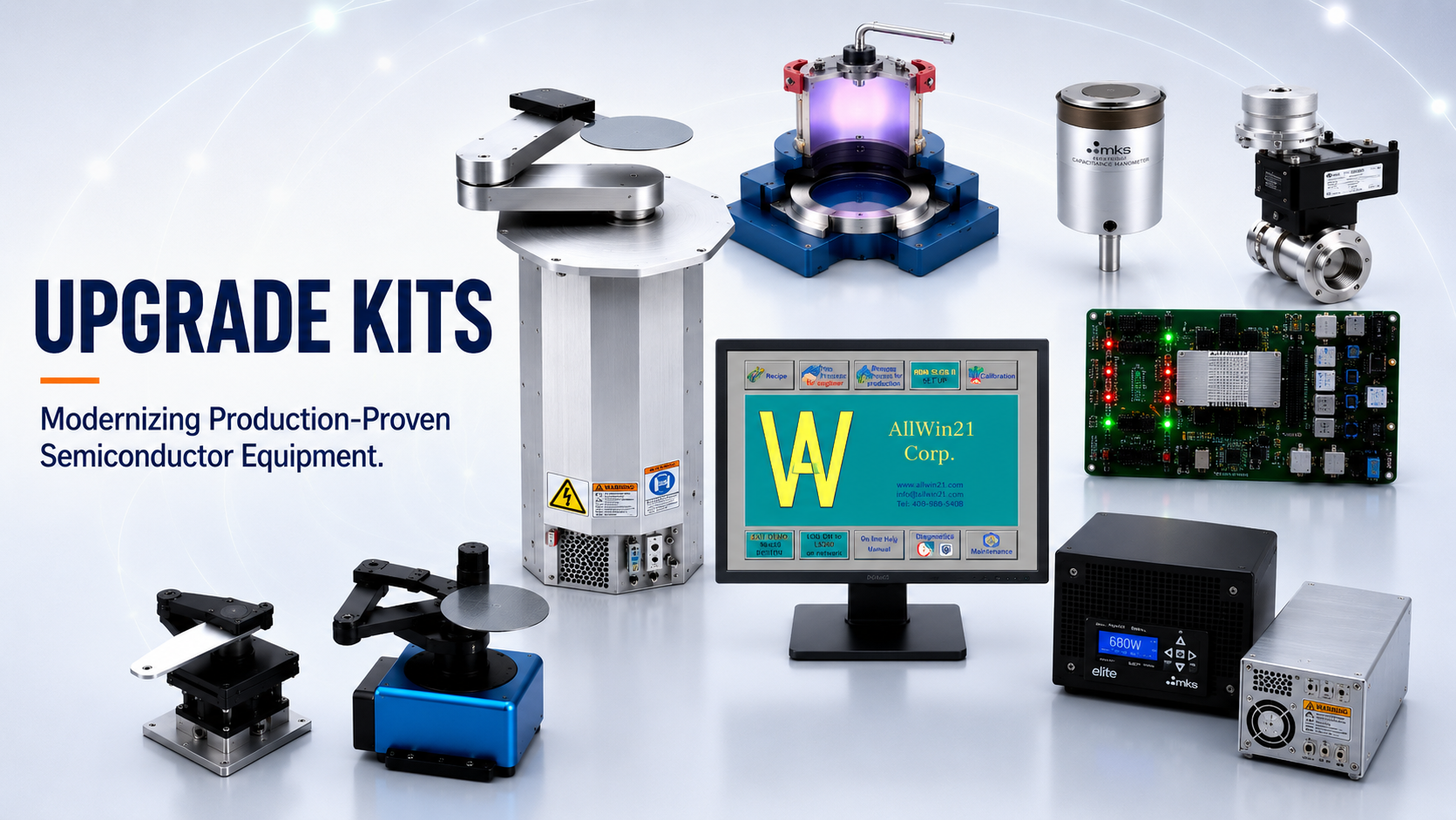
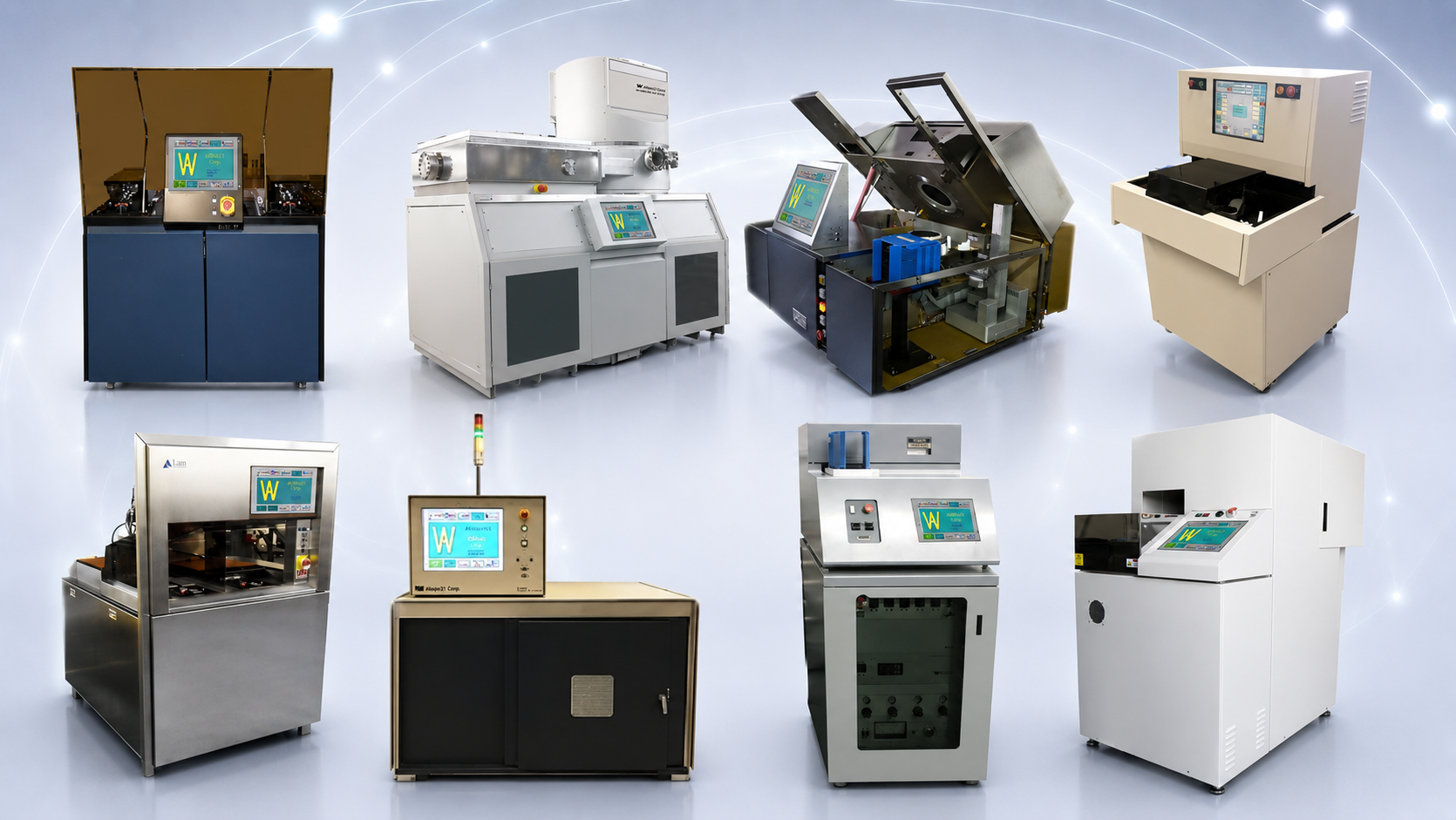
Proven Legacy Platforms • Modern Controls • Engineer Software • Long-Term Support
Why Upgrade or Retrofit a Legacy Semiconductor Tool?
Keep the Process-Proven Platform
Retain qualified chambers, process hardware, and production knowledge already developed on the tool
Avoid unnecessary process requalification associated with replacing the entire system
Extend the useful life of a proven semiconductor platform
Replace Obsolete Components
Replace obsolete controllers, PCBs, computers, and unsupported software
Replace obsolete water-cooled RF generators with modern air-cooled RF systems where applicable
Reduce dependence on difficult-to-find spare parts and repair services
Improve Reliability and Process Control
Improve system stability, repeatability, and long-term reliability
Provide more precise monitoring and control of critical process parameters
Reduce downtime caused by aging electronics and unsupported subsystems
Modernize the User Experience
Upgrade to PC-based control with process data storage and reporting
Add modern GUI and touchscreen operation
Add network connectivity and GEM/SECS-II communication capability where required
Many semiconductor process tools built during the 1990s and early 2000s remain process-proven and productive today. In many cases, upgrading or retrofitting obsolete controls, software, wafer handling, RF systems, and critical subsystems can be a practical alternative to replacing the entire tool.
Looking for One of These Legacy Systems?
AG Associates / Heatpulse
Modular Process Technology / MPT
MPT RTP-600SMPT RTP-600XPRTP-800SRTP-800XPMPT RTP-3000
Matrix
Matrix 105, 106, 104, 205, 206Matrix 303, 302, 403, 10 SeriesMatrix 1104, 1107, 1108, 1303, 1307
Gasonics
Gasonics Aura 1000 Gasonics Aura 2000LL Gasonics AE 2000LL Gasonics Aura 3000 Gasonics Aura 3010 Gasonics L3510
Lam Research
Lam AutoEtch 490, 590, 690, 790Lam Rainbow 4400, 4500, 4600, 4700Lam Rainbow 4420, 4520, 4620, 4720
PlasmaTherm RIE, ICP, DRIE, PECVD
PlasmaTherm 790PlasmaTherm 720PlasmaTherm 730PlasmaTherm 740PlasmaTherm 770PlasmaTherm 700
Perkin-Elmer, TES, SputterTech
KLA-Tencor
Mgage 200Mgage 300Sonogage 200Sonogage 300
Oxford PlasmaLab RIE, ICP, PECVD
Oxford PlasmaLab 133Oxford PlasmaLab 100Oxford PlasmaLab 800Oxford PlasmaLab 80Oxford PlasmaLab 80 plus
MRC-Materials Research Corp, TES
TES MRC 603TES MRC 643TES MRC 8671TES MRC 903TES MRC 923TES MRC 943
Temescal, TES Sputter, Evaporator
Temescal FC-1800Temescal BJD-1800TE VCT-1800Temescal VES 2550
Other Legacy Semiconductor Tools
Do not see your model? Send the OEM, model, serial number, photos, current condition, and application. We can discuss selected legacy semiconductor equipment platforms even if the exact model is not listed above.
Does Any of This Sound Familiar?
Nobody Wants to Touch the Software
The old PC still runs, but nobody is comfortable changing recipes, rebooting the system, or replacing the computer.
More details
Many legacy systems still depend on old operating systems, old interface boards, and software that only one experienced engineer understands. When that engineer leaves, daily operation becomes risky. The tool may still run, but every recipe change or computer problem becomes a production concern.
One Failed Board Can Shut the Tool Down for Months
The equipment is useful, but one obsolete PCB, controller, or power module can stop production.
More details
Many fabs keep old boards, used parts, repaired parts, and unknown spare parts because the original supply chain is gone. The real issue is not just finding one board. The real issue is long-term supportability.
We Keep Replacing Parts, But the Problem Comes Back
A board is repaired, a sensor is replaced, or a module is swapped — then another problem appears.
More details
At some point, a legacy tool may be repairable but not truly reliable. Different suppliers may fix different symptoms, but nobody owns the complete tool architecture. A modernization plan can often reduce repeated troubleshooting cycles.
The Robot Drops Wafers
Wafer transfer errors, cassette issues, alignment problems, and fragile wafer handling cause real production pain.
More details
Legacy wafer handling problems may come from worn mechanics, obsolete electronics, old sensors, old software logic, or a combination of all of them. For automatic single-wafer tools, a solid integrated robotic wafer transfer upgrade can reduce wafer breakage risk and improve long-term reliability.
The Tool Runs Today, But Nobody Trusts It Tomorrow
The system is still valuable, but engineers are never fully confident it will stay stable.
More details
Intermittent faults are often the most painful problems. The tool may pass a simple test, then fail during production. Engineers need history, trends, signals, and comparison between good runs and bad runs — not just a final alarm message.
Engineers Spend More Time Troubleshooting Than Running Wafers
Production time is lost because engineers are searching for the cause instead of improving the process.
More details
When the system does not show enough information, troubleshooting becomes guesswork. The question is usually simple: what changed? The hard part is finding when it changed and which signal changed first.
The OEM Stopped Supporting the Tool Years Ago
The chamber still has value, but the original support path is gone.
More details
Many legacy tools still have useful process hardware, stable chamber behavior, and qualified recipes. The problem is often the controller, electronics, software, wafer handling, or obsolete modules around the chamber.
Every Shutdown Turns Into a Fire Drill
When the tool goes down, the fab starts searching for parts, old notes, old suppliers, and anyone who remembers the system.
More details
This is why many customers eventually move from repair-only thinking to upgrade planning. The goal is not only to recover from today's failure. The goal is to reduce the chance of the same type of shutdown happening again.
Three Upgrade Levels — Usually Simpler Than Customers Expect
Level 1 — Controller, PCB, and Allwin21 Software Upgrade
Typical scope may include:
New controller hardware and modern interface electronics
New PC and Allwin21 equipment software
New or redesigned PCB architecture with more useful equipment signals
Recipe control, alarm review, signal screens, trends, and troubleshooting support
Why customers choose this level:
Old PC and obsolete boards are creating support risk
Engineers need to see more signals instead of guessing
The chamber and process are still useful
The fab wants a practical path to keep the tool running
Engineer-Driven Software: what does it really do?
The purpose of Allwin21 software is not just to make a nicer screen. The purpose is to help equipment engineers and process engineers do their daily work faster.
Legacy systems often do not show enough information. Some signals are hidden inside old control boards. Some useful signals were never collected because the old hardware architecture was limited.
Allwin21 upgrades expose more equipment information, including digital I/O, analog signals, temperature information, RF-related information, motion status, recipe information, equipment history, and subsystem status depending on the tool configuration.
Instead of guessing, engineers can compare a good run to a bad run, review stored data, look at trends, and identify what changed. In many support cases, the customer can open the related screen, take photos or screenshots, and send them to Allwin21 engineers for faster troubleshooting.
The signal was often inside the equipment. The upgrade makes it visible, stores it, and turns it into useful engineering information.
Level 2 — Level 1 + Integrated Robotic Wafer Transfer
Typical scope may include:
Controller, PCB, and Allwin21 software upgrade
Integrated solid robotic wafer transfer for automatic single-wafer tools
Replacement of obsolete handling modules where applicable
Improved wafer transfer reliability and serviceability
Why customers choose this level:
Wafer breakage or transfer errors are creating real production loss
Original robot parts are obsolete or difficult to support
The customer wants lower handling risk and easier troubleshooting
Automatic single-wafer operation is still required
Why upgrade wafer handling?
Wafer handling problems are rarely just one mechanical problem. They can involve old robot electronics, sensors, software logic, cassette transfer, alignment, timing, and worn mechanical parts.
A modern integrated wafer transfer upgrade can reduce dependence on obsolete handling modules, improve repeatability, and help protect valuable wafers from unnecessary handling failures.
For fragile substrates and compound semiconductor wafers, better handling is not just convenience. It directly affects wafer loss, downtime, and operator confidence.
Level 3 — Level 1 or Level 2 + Key Subsystem Replacement
Typical scope may include:
New air-cooled RF generator, RF matching network, DC or pulse DC power supply
New MFCs, Baratron, throttle valve, temperature controller, sensors, and key modules
Chamber-related upgrades when required by equipment condition or process need
GEM/SECS networking, compound semiconductor susceptor support, and application-specific upgrades
Why customers choose this level:
The tool is important enough for long-term ownership
Too many obsolete components are creating downtime risk
The customer wants a stable platform instead of repeated emergency repair
Production, process development, or compound semiconductor work requires higher confidence
Why replace obsolete subsystems instead of repairing them again?
Sometimes repairing one board or one module is not enough. If RF, matching, gas control, pressure control, temperature control, sensors, or handling modules are all aging, the tool may keep failing in different ways.
Subsystem replacement can reduce the dependence on unknown used parts and questionable repairs. It also gives the software more useful signals to monitor, store, compare, and display.
The goal is to turn a fragile legacy tool into a more supportable production platform.
Wait — is this going to become a six-month project?Usually not. Many customers are surprised how quickly a legacy semiconductor tool can be modernized when the original chamber, facility connections, and qualified process platform can remain in place.
RTP / RTA~1 Day
Plasma Asher~1 Day
Etch / RIE1–2 Days
PVD / Sputter2–5 Days
Why can many upgrades be completed so quickly?
Many upgrade projects keep the original process chamber, mechanical platform, facility connections, and qualified process history. The upgrade focuses on controller hardware, software, interface boards, wafer handling, and selected obsolete subsystems based on the tool condition and customer requirements.
Most RTP, plasma asher, and plasma etcher upgrades can often be performed at the customer's facility. PVD and more complex systems may require more time. Only a small number of projects require shipment to Allwin21.
The final scope, installation schedule, and expected downtime are defined in the formal quotation after Allwin21 reviews the equipment model, photos, condition, configuration, and customer requirements.
Why So Many Customers Upgrade Instead of Fighting the Same Tool Again
Keep the Process Hardware That Still Works
Many older chambers, thermal platforms, RF platforms, and vacuum platforms still have useful process value
The weak point is often old controls, old software, obsolete electronics, or unsupported modules
Upgrade can be a practical path when the process is already qualified
Stop Blind Troubleshooting
More I/O, analog, sensor, history, and subsystem information can be visible from the screen
Engineers can compare good runs and bad runs instead of relying only on memory
When something changes, the system gives engineers more places to look first
Reduce Obsolete Parts Dependency
Old PCs, old boards, obsolete controllers, and unsupported modules are common downtime risks
Modern control hardware and redesigned boards help create a more supportable platform
The goal is fewer emergency repairs and a clearer long-term support path
Work With Engineers Who Understand Equipment
Allwin21 upgrades are built around real equipment engineering, process engineering, and field service experience
The discussion starts with your tool, your process, your failure history, and your real production problem
The upgrade proposal is based on actual tool condition and customer requirements
Upgrade the Old Tool or Buy a New Allwin21 System?
Upgrade Usually Makes Sense When
The chamber and main process platform are still good
The process is already qualified and the customer wants minimum process disruption
The main pain is controller, software, PCB, handling, or obsolete module support
The customer wants to keep a useful production tool running with lower risk
New Equipment May Make More Sense When
The old platform is too worn, incomplete, or mechanically unstable
Throughput, wafer size, automation, safety, or long-term production needs have changed
The customer wants a clean start with a modern Allwin21 RTP, plasma asher, plasma etcher, PVD, or metrology system
Buying another old used tool would simply restart the same pain with another obsolete system
Allwin21 can discuss both paths: upgrade a proven legacy tool when it still makes sense, or help the customer move to a modern Allwin21 platform when the old equipment is no longer the best long-term choice.
Many customers first know Allwin21 through a legacy tool upgrade. Later, when they need new equipment, they already know who understands their process tools.
Request an Upgrade Kit Review
Please provide the following equipment information and upgrade requirements. Based on your equipment condition, upgrade goals, and future plans, Allwin21 will review and recommend a suitable upgrade or retrofit solution.
Additional Upgrade Kit Keywords and Legacy Equipment References
Semiconductor equipment upgrade kit, legacy semiconductor equipment upgrade, obsolete semiconductor equipment support, controller upgrade, PCB upgrade, software upgrade, Allwin21 software, semiconductor tool modernization, RTP upgrade, RTA upgrade, plasma asher upgrade, plasma descum upgrade, plasma etcher upgrade, RIE upgrade, sputter system upgrade, PVD upgrade, wafer handling upgrade, robotic wafer transfer upgrade, AG Associates Heatpulse, MPT RTP, Matrix asher, Gasonics Aura, Gasonics L3510, Branson IPC, Tegal 901e, Tegal 903e, Lam AutoEtch, Lam Rainbow, Perkin-Elmer sputter, MRC sputter, Temescal, KLA-Tencor Mgage, Sonogage, legacy tool obsolescence, obsolete spare parts, semiconductor equipment downtime, equipment troubleshooting, good run bad run comparison, I/O signal monitoring, analog signal monitoring, equipment history, process stability, tool uptime.
Gasonics Aura 2000 Upgrade
Plasma-Therm 790 720 730 RIE PECVD
Oxford 80+ RIE PECVD
Tegal 915 Tegal 965 Upgrade
The Upgrade kit for Tegal® 915 Tegal 965 includes a New PC Board with Allwin21 software package ,new main control board and cables. The kit is easy to incorporate (plug-and-play) into the original Tegal 915,Tegal 965 Plasma Asher Plasma Etcher systems.…
AG Associates Heatpulse 610i Upgrade
Allwin21 Corp. also provide upgrade kit for original AG Associates Heatpulse 610I for much better performance.
AG Associates Heatpulse 610 Upgrade
Allwin21 Corp.is the exclusive licensed manufacturer of AG Associates Heatpulse 610 Rapid Thermal Processing equipment. Allwin21 is manufacturing the new AccuThermo AW Series Atmospheric Rapid Thermal Processors and Vacuum Rapid Thermal Processors.
AG Associates Heatpulse 410 Upgrade
Allwin21 Corp. also provide upgrade kit for original AG Associates Heatpulse 410 for much better performance. Upgraded AG Heatpulse 410 is a rapid thermal processor which uses high-intensity, visible radiation to heat single wafer for short periods at precisely controlled temperatures
AG Associates Minipulse 310 Upgrade
Allwin21 Corp. also provide upgrade kit for original AG Associates Minipulse 310 for much better performance. AG Minipulse 310 is a rapid thermal processor
AG Associates Heatpulse 210 Upgrade
Allwin21 Corp. also provide upgrade kit for original AG Associates Heatpulse 210 for much better performance. Upgraded AG Heatpulse 210 is a rapid thermal processor which uses high-intensity, visible radiation to heat single wafer for short periods at precisely controlled temperatures.