
Rapid Thermal Processing (RTP) — Frequently Asked Questions
Allwin21 AccuThermo RTP: advanced process monitoring, multi-level wafer protection, atmospheric processing, temperature control, and contamination management for silicon and valuable compound semiconductor wafers.
1. Allwin21 Technology & Wafer Protection
Q1. What makes Allwin21 AccuThermo atmospheric RTP systems different?
Allwin21 combines a production-proven RTP platform with modern PC-based recipe control, independently controlled lamp heating zones, top-and-bottom heating, noncontact ERP pyrometry, PowerSum monitoring, and programmable process safeguards.
- AW610M: up to 6-inch substrates; 6 independently controlled lamp zones.
- AW820M: up to 8-inch substrates; 10 lamp zones; semi-automatic operation.
- AW820R: up to 8-inch substrates; 10 lamp zones; automatic single-wafer handling.
- Programmable Temperature Tolerance and PowerSum Tolerance can stop a process when monitored values exceed established limits.
- Programmable maximum lamp intensity limits for RAMP and STEADY steps help restrict excessive heating.
- For oxygen-sensitive applications, configurable double O-ring leak checking and O₂ analysis add safeguards.
Key principle: RTP performance should be evaluated by temperature control, PowerSum behavior, and final wafer process results—not by temperature display alone.
Q2. How does Allwin21 protect valuable wafers before, during, and after processing?
Protection is organized around the entire process, especially for expensive InP, GaAs, GaN, and other compound semiconductor substrates.
| Stage | Protection / verification | Purpose |
|---|---|---|
| Before | Double O-ring vacuum leak check | Checks the seal before the recipe starts; a failed check inhibits processing. |
| Before | O₂ analyzer and gas purge | Confirms that oxygen is within the specified process limit, where the relevant interlock is configured. |
| Before | Dummy-wafer qualification | Establishes suitable temperature and PowerSum reference ranges. |
| During | Temperature Tolerance | Stops processing if monitored temperature moves outside the programmed allowable range. |
| During | PowerSum Tolerance | Stops processing if the PowerSum check exceeds its programmed tolerance. |
| During | RAMP / STEADY lamp intensity limits | Limits maximum lamp intensity in each heating phase. |
| During | O₂ analyzer / interlock | Detects oxygen excursions and can inhibit subsequent wafers. |
| After | Process records and wafer qualification | Reviews temperature/PowerSum behavior and verifies actual wafer results. |
Important: A stop or interlock reduces risk; it does not guarantee that a wafer already exposed to an abnormal condition can be recovered. Post-process checks identify problems and help protect subsequent wafers.
Q3. What are Temperature Tolerance and PowerSum Tolerance?
Temperature Tolerance is the permitted deviation between the monitored temperature and the programmed temperature condition. If the configured tolerance is exceeded, the controller stops the process.
PowerSum Tolerance checks whether the monitored PowerSum is within an established acceptable range. If the configured PowerSum tolerance is exceeded, the controller stops the process.
These are complementary checks: a process can show an acceptable temperature reading but abnormal lamp-power behavior, or the reverse. Tolerance settings must be established for the specific recipe and substrate configuration.
Q4. What is PowerSum, and why is it useful?
PowerSum is Allwin21’s lamp-power monitoring function. It tracks the accumulated lamp-power/intensity contribution over the applicable processing interval, rather than serving as a direct measurement of wafer temperature or temperature uniformity.
- Compare heating behavior between qualified runs using the same recipe and wafer/susceptor configuration.
- Establish reference values with dummy wafers and apply PowerSum Tolerance checks in production.
- Detect abnormal heating behavior that may warrant investigation of lamps, chamber condition, substrate configuration, or facilities.
- Use staged recipe checks to stop an abnormal run before a later critical STEADY step, where configured.
PowerSum is a monitoring and protection parameter—not a substitute for final wafer qualification.
Q5. Why are separate lamp intensity limits for RAMP and STEADY important?
Rapid temperature ramps may demand high lamp output. A programmable RAMP lamp intensity limit restricts the maximum applied intensity during heating, helping reduce the risk of excessive lamp heating of sensitive substrates.
A separate STEADY lamp intensity limit restricts maximum intensity while maintaining the target temperature. Because RAMP and STEADY have different power requirements, separate settings allow more appropriate limits for each stage.
Limits must be chosen carefully: overly low limits may prevent the tool from reaching the required ramp rate or maintaining its temperature setpoint. The older AG Associates AW610 did not have these programmable RAMP/STEADY intensity-limit functions; the modern Allwin21 controller adds them.
Q6. Why does the number of independently controlled lamp zones matter?
Independent lamp zones provide more flexibility to distribute heating power spatially and adjust center-to-edge heating behavior. The AW610M has 6 lamp zones; the AW820M and AW820R have 10 lamp zones.
More zones provide additional control flexibility for different wafer sizes and process conditions. However, zone count alone does not guarantee a particular wafer temperature uniformity. Actual performance must be qualified using the complete recipe, wafer configuration, and wafer process results.
2. Oxygen-Sensitive Processing Without Vacuum
Q7. How can atmospheric RTP support oxygen-sensitive applications without vacuum?
Many processes require low oxygen concentration, not necessarily low absolute pressure. In such cases, high-purity N₂ or an appropriate forming gas can purge oxygen from the isolated quartz process chamber while processing remains near atmospheric pressure.
For demanding oxygen-sensitive applications, Allwin21 recommends evaluating the AW820M or AW820R with double O-ring leak checking and an O₂ analyzer. Achievable oxygen concentration depends on gas purity, flow, sealing, chamber conditions, and the actual recipe; a ppm-level target is not a universal specification.
If a process intrinsically requires reduced pressure, atmospheric RTP is not a substitute for vacuum RTP. Likewise, low oxygen inside the RTP chamber does not eliminate air exposure during wafer transfer outside the chamber.
Q8. How does the double O-ring vacuum leak check protect wafers before processing?

The space between the two O-rings can be evacuated and checked before an RTP run. If the vacuum leak check fails, the configured interlock prevents the process from starting.
This checks seal integrity before heating a valuable wafer. The double O-ring also helps limit air ingress, but its distinctive protection function is the pre-process vacuum leak check. This is a vacuum check of the seal space; the wafer process chamber itself remains atmospheric.
Q9. What does the O₂ sensor/analyzer do during RTP processing?
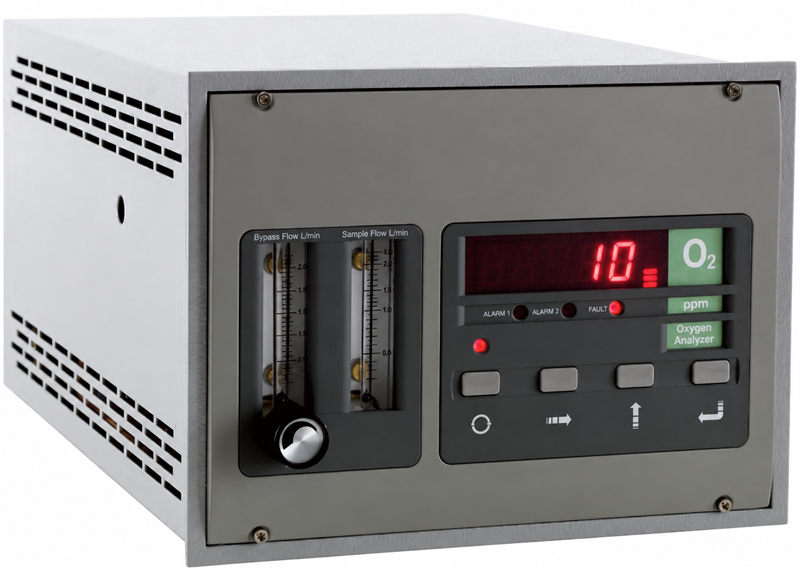
The O₂ analyzer measures residual oxygen concentration and can be used to confirm that the process environment meets a specified limit before processing. During a run, it monitors for oxygen excursions.
If oxygen exceeds the configured threshold, the system can alarm and, with the appropriate interlock, prevent further processing of subsequent wafers. The wafer already in process may have been affected; the purpose is to prevent the same problem from continuing through additional production wafers.
Double o-ring = pre-process seal verification. O₂ analyzer = actual oxygen measurement and ongoing process protection.
Q10. How can nitrogen purge and controlled oxygen addition be configured?
A previously discussed AW820M oxygen-sensitive application used an initial N₂ purge of approximately 20 SLM, followed by approximately 5 SLM N₂ during processing, with a low-range O₂ MFC considered for controlled oxygen addition. These are application examples, not default settings or guaranteed results.
For controlled oxygen processing, the O₂ MFC range, N₂ flow, analyzer range, leak integrity, and measured chamber oxygen concentration must be qualified together.
3. Temperature Measurement & Process Qualification
Q11. What is the difference between K-Type Thermocouple (TC) and ERP Pyrometer temperature measurement in Allwin21 RTP systems?
Allwin21 AccuThermo RTP systems support two temperature measurement methods: K-Type Thermocouple (TC) and Emissivity-Compensated Pyrometer (ERP). Each method has different characteristics and is suitable for different temperature ranges and applications.
1. K-Type Thermocouple (TC) Temperature Measurement
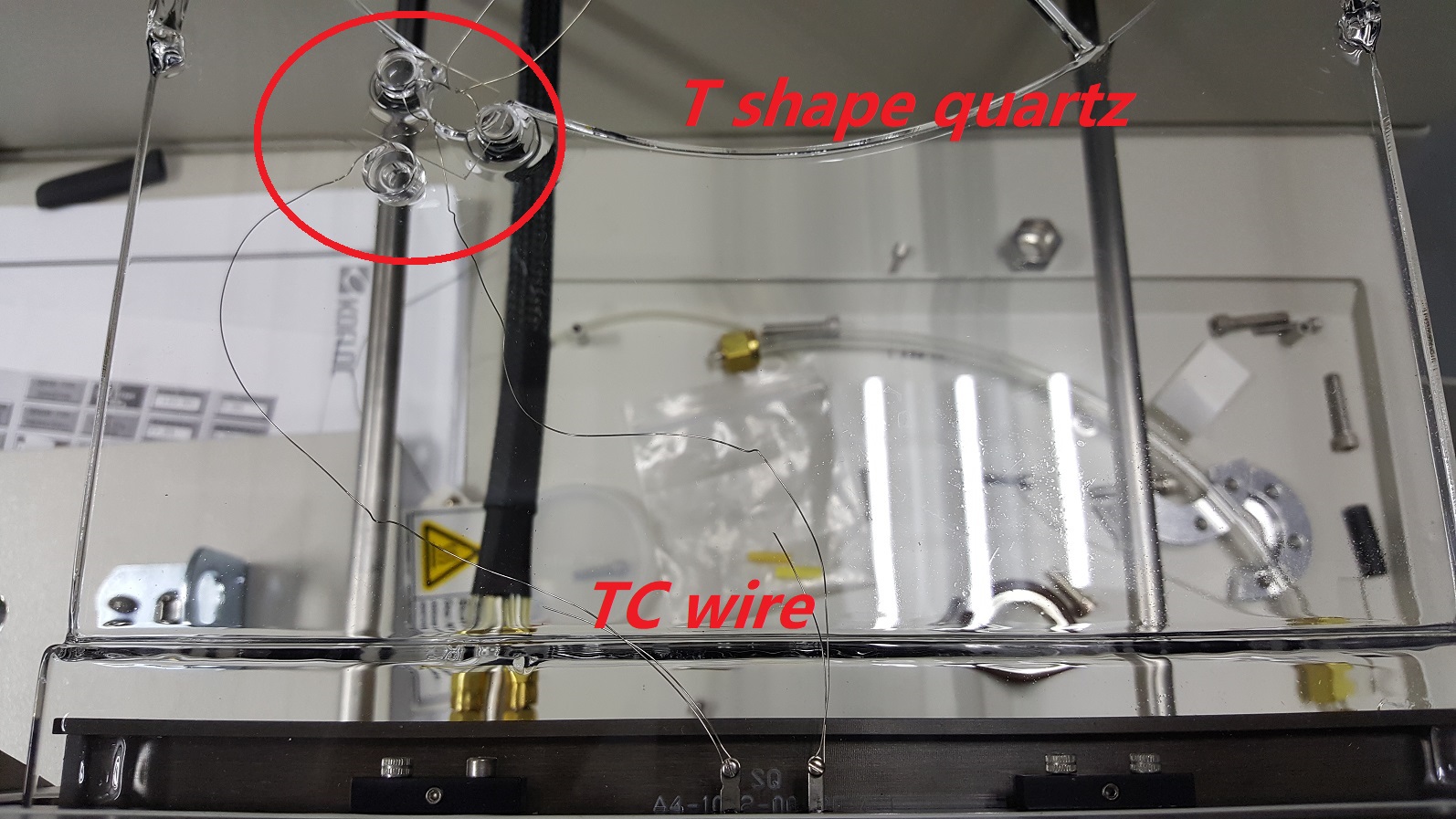
A K-Type Thermocouple measures temperature through physical contact with the measured surface or component.
In Allwin21 RTP systems, TC temperature measurement is typically used for lower-temperature processing, approximately 150°C to 800°C, depending on the system configuration and application.
Advantages of TC Temperature Measurement:
- Suitable for lower-temperature RTP applications.
- Does not depend on wafer optical emissivity.
- Provides direct contact-based temperature measurement.
- Useful for temperature monitoring and control within its applicable range.
TC Measurement Limitations:
- Measurement accuracy depends on proper thermal contact.
- Thermal lag may occur during rapid temperature changes.
- Response time can be slower than noncontact pyrometry.
- The measured temperature may differ from the actual wafer temperature.
- Contact-based measurement does not directly represent the temperature distribution across the entire wafer.
2. ERP (Emissivity-Compensated Pyrometer) Temperature Measurement
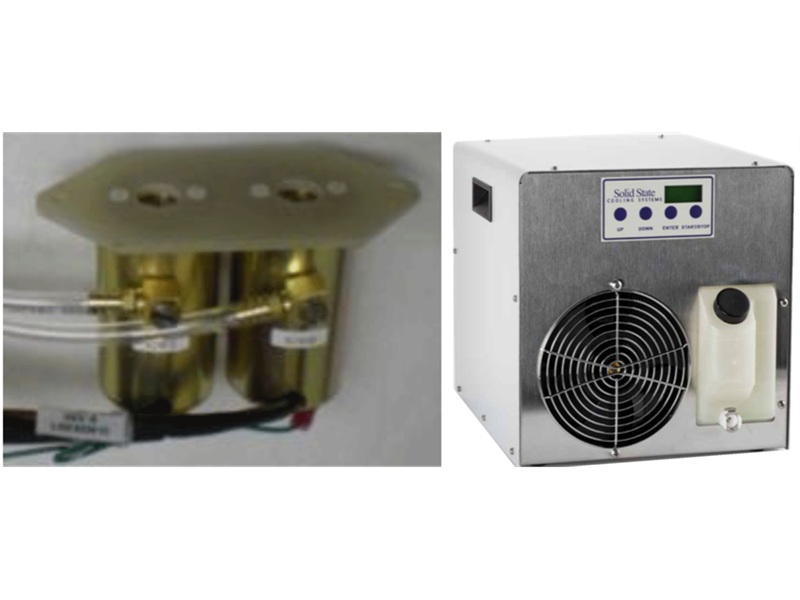
The Allwin21 ERP Pyrometer provides noncontact temperature measurement by detecting thermal radiation from the wafer or measured surface.
ERP temperature measurement is typically used for high-temperature RTP processing, approximately 400°C to 1250°C, depending on system configuration and calibration.
The Allwin21 ERP system incorporates emissivity-compensation technology to improve temperature measurement for semiconductor RTP applications.
In the AW610M, the ERP Pyrometer measures temperature through a sapphire window located at the bottom of the isolated quartz process chamber.
Advantages of ERP Temperature Measurement:
- Fast, noncontact temperature measurement.
- Suitable for rapid temperature ramping.
- No physical thermocouple contact with the wafer is required.
- Suitable for high-temperature RTP processing.
- Emissivity-compensation technology helps reduce measurement errors associated with wafer emissivity.
ERP Measurement Considerations:
- Temperature readings depend on wafer emissivity and optical conditions.
- Proper calibration is important for accurate measurement.
- Wafer backside materials and surface conditions may affect measurement.
- A single measurement location does not directly represent the temperature uniformity of the entire wafer.
3. Comparison of TC and ERP Temperature Measurement
| Feature | K-Type Thermocouple (TC) | ERP Pyrometer |
|---|---|---|
| Measurement Method | Contact | Noncontact |
| Typical Allwin21 RTP Range | 150–800°C | 400–1250°C |
| Response to Rapid Temperature Changes | May experience thermal lag | Fast response |
| Wafer Emissivity Dependence | No optical emissivity dependence | Emissivity compensation required |
| Physical Contact | Required at measurement point | Not required |
| Typical Application | Low- and medium-temperature RTP | Medium- and high-temperature RTP |
| Measurement Limitations | Contact quality and thermal lag | Optical conditions and emissivity |
4. Why Is Temperature Measurement Alone Not Sufficient for RTP Process Qualification?
Neither TC nor ERP temperature measurement directly determines the temperature uniformity or final process results across the entire wafer.
Allwin21 recommends evaluating RTP performance using three complementary parameters:
- Temperature Control and Monitoring: Verify that the measured temperature follows the programmed process profile within the specified tolerance.
- PowerSum Monitoring: Monitor accumulated lamp-power behavior and verify that PowerSum remains within the established process tolerance.
- Final Wafer Process Qualification: Evaluate actual wafer results, such as sheet resistance, oxide thickness, electrical characteristics, or other application-specific measurements.
Temperature Tolerance and PowerSum Tolerance provide additional process protection. If either monitored parameter exceeds its programmed tolerance limits, the RTP system can stop processing to reduce the risk of wafer damage.
Allwin21 RTP Temperature Control Advantage:
Allwin21 combines TC and ERP temperature measurement options with programmable Temperature Tolerance, PowerSum Tolerance, and RAMP/STEADY lamp intensity limits to provide advanced temperature control, process monitoring, and wafer protection.
These functions are particularly valuable when processing expensive compound semiconductor substrates, including InP, GaAs, GaN, and GaInP.
Final process qualification should always be based on actual wafer results rather than temperature readings alone.
Q12. Why is wafer process qualification more important than temperature readings alone?
Temperature monitoring is necessary but is not the same as proving wafer-level process uniformity. Allwin21 uses three complementary evaluation levels:
- 1. Temperature Control: verify that the programmed thermal profile is followed.
- 2. PowerSum Monitoring: verify that heating behavior remains consistent with qualified runs.
- 3. Final Wafer Process Qualification: measure the actual process outcome, such as sheet resistance, oxide thickness, electrical properties, or other application-specific results.
For high-temperature processes, a limited set of thermocouple points cannot by itself establish the final wafer process result. Wafer measurements remain the final acceptance criteria.
Q13. How do lamp zones, ERP, and PowerSum work together?
The lamp zones control the spatial distribution of lamp power. ERP supplies noncontact temperature feedback. PowerSum provides an additional record/check of lamp-power behavior. Temperature Tolerance and PowerSum Tolerance can stop a run when configured limits are exceeded.
Together, these tools help control and monitor the heating process; actual wafer uniformity and repeatability still require application-specific wafer qualification.
4. Atmospheric vs. Vacuum RTP
Q14. What is the difference between atmospheric RTP and vacuum RTP?
Atmospheric RTP processes substrates near atmospheric pressure with controlled gases such as N₂, O₂, Ar, or forming gas. Vacuum RTP operates at reduced pressure and requires vacuum pumps, pressure-control hardware, and vacuum-compatible chamber components.
Allwin21 generally recommends atmospheric RTP when reduced pressure is not required by the process. It avoids vacuum pumping complexity and supports top-and-bottom lamp heating and ERP temperature measurement. Read: Why Atmospheric RTP Instead of Vacuum RTP?
Q15. Are AW610M, AW820M, and AW820R atmospheric or vacuum RTP systems?
The AW610M, AW820M, and AW820R are atmospheric RTP systems. They use an isolated quartz process tube and do not require a vacuum pump for normal atmospheric operation. The AW820V is a separate vacuum RTP configuration.
The availability of particular process gases and monitoring functions depends on the installed configuration.
Q16. Why does vacuum RTP require different chamber and seal construction?
A vacuum RTP chamber must withstand a pressure differential, which affects quartz-window design and sealing. In earlier Allwin21 comparisons, vacuum configurations were described as using a thicker quartz window and high-temperature O-rings; the atmospheric isolated quartz tube avoids those vacuum-specific requirements.
This is distinct from the optional double O-ring leak-check feature on an atmospheric RTP: its evacuated space is between the seals, not the process chamber.
5. High-Temperature Processing & Thermal Limits
Q17. Can Allwin21 RTP systems process at 1250°C?
Allwin21 RTP systems can be configured for processing up to approximately 1250°C, subject to the applicable system specification, substrate configuration, hold time, and facility conditions.
For the AW610M, occasional short-duration operation near 1250°C may be suitable with adequate cooling. For frequent high-temperature operation, Allwin21 generally recommends evaluating the AW820M or AW820R. Maximum temperature does not imply unlimited hold time.
Q18. Why are high-temperature hold time and cooling facilities important?
Extended high-temperature holds place more thermal stress on chamber components and cooling systems. Allwin21 has advised AW610M customers that at approximately 1000°C, a hold of 300 seconds or less is preferred with good facility cooling; longer holds can shorten aluminum chamber life.
High-temperature operation must be assessed using the requested temperature, duration, wafer/susceptor thermal mass, run frequency, and available cooling water.
Q19. What temperature and hold-time combinations should customers provide?
Customers should specify maximum temperature and hold time together, not temperature alone. The following previously discussed reference combinations are application guidance, not universal guaranteed operating limits:
| Temperature | Reference hold time |
|---|---|
| 1250°C | 120 s |
| 1200°C | 150 s |
| 1150°C | 200 s |
| 1100°C | 300 s |
| 1000°C | 360 s |
| 900°C | 450 s |
| 800°C | 600 s |
| 700°C | 900 s |
| 650°C | 1200 s |
The AW610M-specific recommendation of approximately 300 s or less at 1000°C with good facilities remains the more conservative guidance for that model. Actual suitability requires engineering review.
Q20. What determines the achievable ramp and cooling rates?
Achievable ramp rates depend on substrate material, size, thickness, backside properties, susceptor mass, target temperature, and the selected lamp intensity limits. A rate appropriate for silicon may be unsuitable for fragile compound semiconductor substrates.
Cooling depends on turning down or switching off lamps, gas flow, chamber design, and thermal mass. A programmed cooling rate cannot exceed the physical cooling capability of the loaded system.
6. Susceptors, Quartz Isolation & Contamination Control
Q21. What is a susceptor, and when is it useful?

A susceptor is a support or enclosure used to help establish suitable heating conditions for a wafer or sample. Allwin21 has discussed SiC-coated graphite bases and covers for thin, small, transparent, or compound semiconductor substrates and for selected contamination-sensitive processes.
Susceptors are application-dependent options, not mandatory for every wafer. Their thermal mass can reduce achievable ramp and cooling rates; wafer size, thickness, material, and process objectives must be reviewed before selection.
Q22. Can a silicon wafer be used instead of a graphite susceptor?
For some small samples or applications, a silicon carrier wafer may be an acceptable starting point if it provides satisfactory processing results. A pocket wafer or engineered susceptor may be preferred where sample movement, contact, uniformity, or material compatibility requires it.
The choice should be qualified using actual wafer results rather than assumed from substrate material alone.
Q23. How does a susceptor with a base and cover reduce contamination?
A covered susceptor can help contain evaporated or deposited materials during high-temperature processing and reduce deposits on the surrounding quartz tube. This can be useful for compound semiconductor wafers and samples with films that may volatilize.
It does not eliminate contamination; the susceptor material, temperature, and process chemistry must be evaluated.
Q24. What is the purpose of the isolated quartz tube?
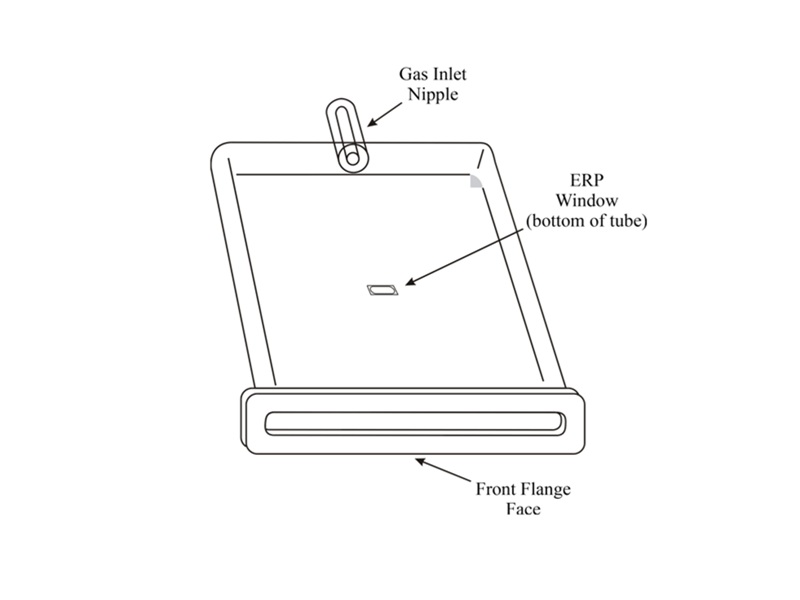
The isolated quartz tube separates the wafer/process atmosphere from the surrounding lamp and chamber hardware. It supports controlled process gases and helps limit contamination from external chamber components.
Quartz cleanliness, wafer materials, and maintenance practices still affect contamination risk.
Q25. What is the removable inner top quartz liner used for?
The AW610M can be configured with a removable liner in the upper portion of the isolated quartz tube. The liner collects deposits from materials that evaporate during processing.
Instead of repeatedly cleaning the entire main quartz tube, operators can remove and clean the liner. This can simplify maintenance and reduce contamination of the main tube. The liner is a separate component from the main isolated quartz tube.
Q26. Can removable quartz tubes, liners, and covered susceptors eliminate cross-contamination?
These components can reduce contamination and simplify cleaning, but they do not guarantee zero cross-contamination. For particularly sensitive processes, dedicated quartz tubes, dedicated susceptors, or separate equipment may be appropriate.
7. Model Selection & Applications
Q27. How should customers choose AW610M, AW820M, or AW820R?
Selection depends on wafer size, substrate material and thickness, maximum temperature, hold time, ramp rate, process gases, oxygen sensitivity, throughput, automation needs, and budget.
| Application / requirement | General recommendation |
|---|---|
| Up to 6-inch substrates; research or lower-volume processing | AW610M |
| Up to 8-inch substrates; semi-automatic operation | AW820M |
| Up to 8-inch substrates; automatic single-wafer production | AW820R |
| Frequent operation near 1250°C | Evaluate AW820M / AW820R |
| ppm-level oxygen-sensitive processing | Evaluate AW820M / AW820R with double O-ring leak check and O₂ analyzer |
| Small, thin, transparent, or sensitive wafers | Evaluate appropriate carrier / susceptor |
| Process specifically requiring reduced pressure | Evaluate a vacuum RTP configuration |
Optional components should be selected only after reviewing the customer’s actual process and wafer-handling requirements.
Q28. What information is needed for an RTP recommendation or quotation?
- Wafer/substrate material, diameter, thickness, and backside condition.
- Maximum process temperature, hold time, and ramp/cooling requirements.
- Minimum process temperature.
- Longest hold time, and hold temperature.
- Process gases and any specified oxygen concentration or reduced-pressure requirement.
- Wafer carrier, susceptor, or covered-box needs.
- Current or Previous RTP System (Manufacturer and Model).
- Expected throughput, automation requirements, and production versus R&D use.
- Process acceptance criteria, including wafer-level electrical, optical, or film measurements.
- Available facility power, cooling water, and budget.
For oxygen-sensitive applications, specify the required oxygen concentration and whether protection is needed only inside the RTP chamber or throughout wafer transfer.
Need Help Selecting an RTP System?
Tell us your wafer material, size, thickness, temperature, hold time, process gases, oxygen sensitivity, and production requirements. Allwin21 can recommend a suitable RTP model and configuration.
Technical notes: Configuration-dependent options and interlocks must be confirmed in the applicable quotation. Operating examples are not guaranteed performance specifications. A process stop reduces risk but does not guarantee recovery of the wafer already being processed.